"When it comes to attic insulation, R-value is a critical term to understand. It’s the measure of a material’s ability to resist heat flow. In simpler terms, R-value indicates how well insulation can keep heat from moving through it."
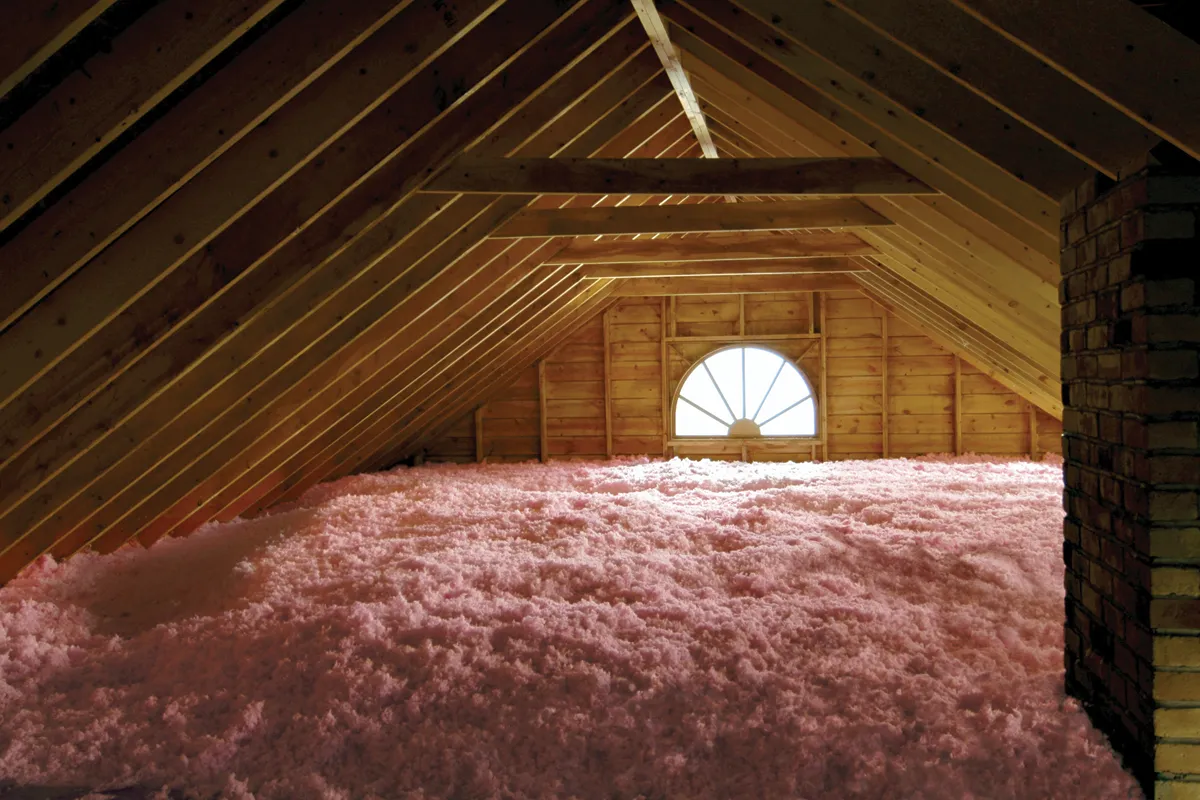
R-value specifically measures thermal resistance.
A higher R-value means the insulation provides greater resistance to heat transfer.
This resistance is crucial in both winter and summer:
In Winter, higher R-value insulation prevents heat from escaping your warm home to the cold outdoors, reducing your heating costs.
In Summer, it works in reverse, preventing external heat from entering your cool home, which lowers your air conditioning expenses.
R-Value is important for several reasons:
Proper R-value directly impacts your home’s energy efficiency. Higher R-values translate to less energy consumption for heating and cooling.
By reducing energy consumption, adequate R-value insulation leads to significant savings on your monthly utility bills.
Correct R-value helps maintain consistent and comfortable indoor temperatures, eliminating drafts and temperature fluctuations.
When your home is well-insulated, your heating and cooling systems don’t have to work as hard, potentially extending their lifespan.
The ideal R-value for attic insulation varies depending on the climate.
In the Great Lakes Home Remodeling region, including Ohio, Michigan, and Indiana, we experience cold winters and hot summers.
For attic insulation in Ohio, Indiana, and Michigan, the recommended R-values are largely consistent due to their similar climate zones (primarily Climate Zone 5, with parts of Michigan in Zones 6 and 7).
Attic Insulation R-Value
The recommended attic R-value is R-49, as specified for Zones 4 & 5 in Ohio. This aligns with Energy Star and IECC recommendations for this climate.
The 2021 International Energy Conservation Code, followed in Indiana, recommends R-49 to R-60 for attic insulation. Most of Indiana is in Climate Zone 5, where these values provide optimal energy efficiency.
Due to colder winters, Michigan also recommends attic insulation of R-49 to R-60, especially in northern parts of the state. The Michigan Uniform Energy Code sets a minimum ceiling insulation of R-24, but the practical and energy-efficient recommendation is R-49 to R-60.

If your attic already has some insulation (3–4 inches), you should add enough to reach at least R-49.
Common attic insulation materials include fiberglass batts, blown-in cellulose, and fiberglass loose-fill, with R-values per inch ranging from 2.9 to 3.2 for fiberglass and about 3.2 for cellulose.
Higher R-values (up to R-60) are recommended for maximum energy savings and comfort, especially in northern Michigan and for homes seeking above-code performance.
In summary, homeowners in the GGreat Lakes Home Remodeling region should aim for attic insulation with an R-value between R-49 and R-60 for new or uninsulated attics to ensure good thermal performance and energy savings.
It’s important to note that the total R-value of your attic insulation depends on factors beyond just the insulation material itself:
Insulation must be installed correctly to achieve its rated R-value. Gaps, compression, or moisture can significantly reduce its effectiveness.
Adequate attic ventilation is crucial to work in conjunction with insulation. It helps regulate moisture and temperature, further enhancing energy efficiency.
Sealing air leaks in your attic floor is essential to prevent conditioned air from escaping and maximize the benefits of your insulation.
Corporate Office: 1602 W Bancroft St, Toledo, OH 43606 Detroit Branch Office: 1395 Wheaton Drive, Suite 700, Troy, MI 48083Dayton Branch Office: West 2nd St, Dayton, OH 45804Cleveland Branch Office: Cleveland, OH 44114Fort Wayne Branch Office: Fort Wayne, IN 46809



1602 W Bancroft St, Toledo, OH 43606
1395 Wheaton Drive, Suite 700, Troy, MI 48083
West 2nd St, Dayton, OH 45804
7401 1st Pl Unit M, Oakwood, OH 44146