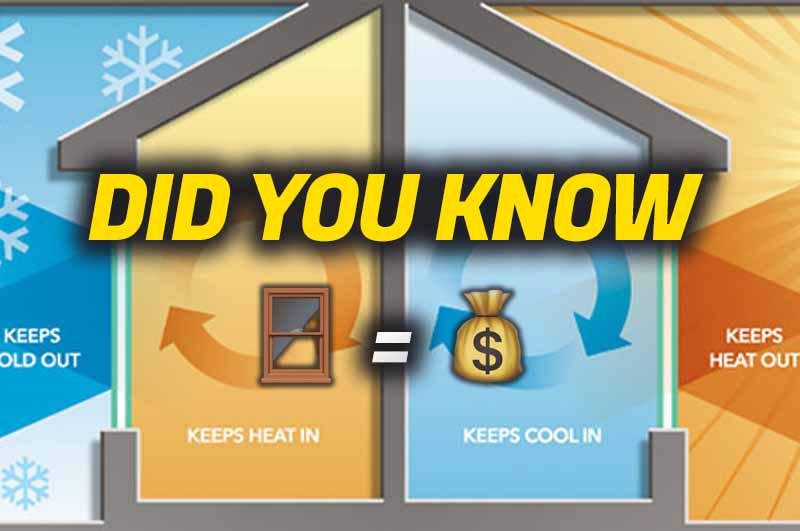
If your Toledo or Cleveland home still has its original windows, you know the feeling: frost on the inside of the glass, a draft across the floor every January, and a heating bill that keeps climbing. Old single pane or early double pane windows lose heat faster than almost any other part of your home, and in a climate with lake effect snow and single digit nights, that adds up.
Replacing them is one of the most noticeable upgrades a Northern Ohio homeowner can make. The hard part is knowing what to buy. This guide explains each specification in plain language, tells you what the numbers should be for our climate, and gives you a checklist to use with any contractor.
Why the ENERGY STAR Northern zone matters
ENERGY STAR splits the country into climate zones. All of Ohio, including Toledo and Cleveland, is in the Northern zone, the most demanding category for keeping heat inside. Under the current ENERGY STAR window criteria, Northern zone windows need:
- U-factor: 0.22 or lower
- SHGC (solar heat gain coefficient): 0.17 or higher
What these numbers mean
U-factor measures how fast a window lets heat escape. Lower is better. An older double pane window might be around 0.40 or higher, so a 0.22 window loses heat roughly half as fast.
SHGC (solar heat gain coefficient) measures how much of the sun's warmth comes through the glass. In the Northern zone some solar gain is welcome in winter, which is why there is a minimum, not just a maximum.
A window labeled ENERGY STAR without a zone is not automatically right for Northern Ohio. Always confirm the Northern zone rating on the NFRC label.
Double pane vs triple pane
A well built double pane window with the right Low-E coating and argon fill can meet the Northern zone standard and is the right choice for most Toledo and Cleveland homes. Triple pane adds a third layer of glass and a second gas space, lowering the U-factor further and cutting outside noise. The tradeoffs are weight and cost.
Our recommendation: double pane with argon and a Northern climate Low-E coating for most openings, and triple pane for large north facing windows, rooms that are always cold, or homes near the lake that take the full force of winter wind.
What is inside the glass
Low-E coatings
Low-E is a microscopically thin metallic coating that reflects heat back into the room. Coatings made for northern climates still let in useful winter sun. A coating made for southern climates blocks too much and works against you in January.
Argon and krypton gas
The space between panes is filled with an inert gas instead of air. Argon is the standard for double pane windows. Krypton performs better in the thinner gaps of triple pane units. Both are safe and colorless.
Warm edge spacers
The spacer holds the panes apart. Old aluminum spacers conduct cold to the edge of the glass, which is where condensation forms first. Warm edge spacers made of foam or composite keep that edge warmer and lower the U-factor of the whole window.
Vinyl frames and condensation
Vinyl frames do not conduct heat the way aluminum does, and they do not rot or warp through freeze thaw cycles. Quality vinyl frames have multiple hollow chambers that trap still air for extra insulation. For most Northwest Ohio homes, vinyl offers the best mix of performance, low maintenance and cost.
Condensation on the inside surface of new windows usually means indoor humidity is high on a very cold day. Fog between the panes is different: the seal has failed and the unit should be replaced under warranty. If you see frost on the inside of your glass today, our article on heat loss through old windows explains what is happening.
How windows affect heating bills in a lake effect climate
According to the U.S. Department of Energy, heat gain and loss through windows accounts for about 25 to 30 percent of home heating and cooling energy use. In Toledo and Cleveland, steady winter wind off Lake Erie speeds up that heat loss and pushes cold air through any gap around an old frame.
- Rooms near windows feel warmer because the glass is no longer radiating cold.
- Drafts around old frames go away when new windows are properly sealed.
- Your furnace cycles less often to hold the temperature.
We install MI Windows replacement windows rated for the Northern climate zone. For more on the product line, see our guide on the windows we install and why they work in Northwest Ohio.
Questions to ask a window contractor
- Are the windows ENERGY STAR certified for the Northern zone? Ask to see the NFRC label.
- What are the exact U-factor and SHGC for the units you are quoting? Get them in writing.
- Do the windows use warm edge spacers?
- What gas fill is used?
- How will the opening be flashed, insulated and sealed?
- What warranties cover the glass, the frame and the installation labor?
- Is the company licensed, bonded and insured?
Ready to replace your windows?
The right window for a Northern Ohio home comes down to a few verified numbers: a U-factor at or below 0.22, an SHGC of at least 0.17, Northern zone ENERGY STAR certification, argon or krypton fill, a warm edge spacer and a multi chamber vinyl frame. Our team brings more than 20 years of home remodeling experience to every window project, every customer has a dedicated project coordinator, and in-home estimates are free.
Frequently asked questions
What U-factor should I look for in a Northern Ohio home?
The ENERGY STAR Northern zone standard is 0.22 or lower. Treat that as the floor. Lower numbers perform noticeably better on the coldest days.
Will new windows lower my heating bill?
In most cases, yes, especially if you are replacing single pane or early double pane windows. The comfort improvement, with fewer drafts and less cold near the glass, is often the first thing homeowners notice.
Does condensation mean my new windows are defective?
Not usually. A little condensation on the inside surface during extreme cold usually means indoor humidity is high. Fog between the panes means the seal failed and the unit should be replaced under warranty.
Is triple pane worth the extra cost in Toledo or Cleveland?
For most homes, a well specified double pane window is the right choice. Triple pane is worth it for large north facing windows, cold rooms, or homes close to Lake Erie.
Can I replace a few windows now and the rest later?
Yes. Start with the draftiest windows or those with failed seals. Replacing all at once usually lowers the per window price and keeps the look consistent. See the benefits of replacing all your windows at once.