Why Lake-Effect Snow Is Hard on Ohio and Michigan Roofs
Quick Answer: Lake-effect snow in Ohio and Michigan creates extreme roof stress through heavy accumulation, moisture saturation, ice dam formation, and rapid temperature fluctuations. The best roofing material for Ohio and Michigan climate must handle 50+ pounds of snow per square foot and resist ice buildup. Tilcor stone-coated metal roofing and GAF asphalt shingles are engineered specifically for these conditions.
Understanding Lake-Effect Snow Dynamics
Ohio and Michigan homeowners understand lake-effect snow viscerally - those sudden, intense snow events that dump 12-24 inches of wet, heavy snow in hours. The process creates unique challenges for roofing systems. Cold air moving across the relatively warm waters of Lake Michigan, Lake Erie, and Lake Huron picks up moisture and releases it as snow on the downwind shorelines and nearby regions. This snow is characteristically wet and dense, carrying far more weight per cubic foot than typical snow.
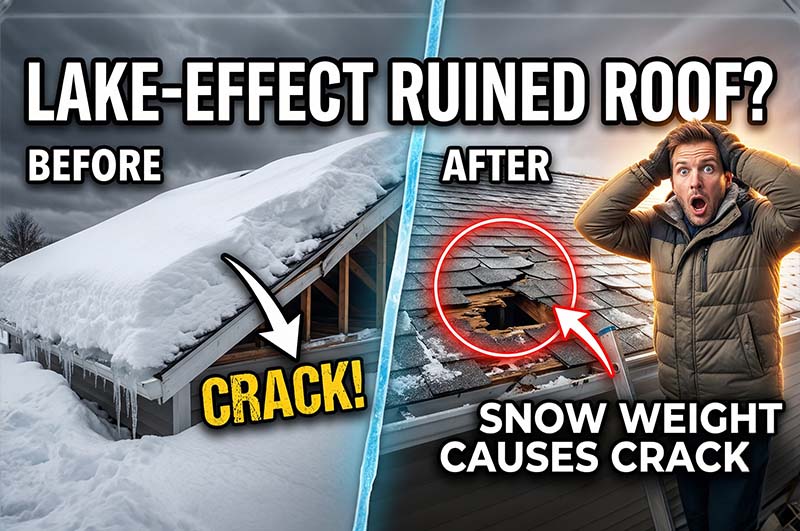
A standard 2-foot accumulation of lake-effect snow can weigh 50-100 pounds per square foot on your roof - dangerously close to or exceeding snow load ratings for residential roofs. Unlike dry, fluffy snow that slides off more easily, lake-effect snow adheres to roofing material, compacts, and creates dangerous loading conditions that strain roof structure and fastening systems.
How Snow Load Damages Roofing Systems
Excessive snow weight doesn't always cause catastrophic failure - often damage is hidden. The weight strains roof deck fasteners, causing them to loosen or pull through sheathing. This micro-failure creates vulnerability to wind uplift, allowing water infiltration that isn't apparent until interior damage appears weeks or months later. With asphalt shingles, heavy snow weight can separate shingles from the roof deck or crack shingles already stressed by freeze-thaw cycles.
Metal roofing like Tilcor stone-coated metal handles snow load dramatically better. The interlocking design distributes weight across the entire roof panel rather than concentrating stress on individual fastening points. The smooth surface also prevents snow adhesion, allowing snow to slide more readily once freeze-thaw cycles begin, naturally shedding accumulated weight.
Ice Dam Formation and Water Intrusion
Ice dams are the nemesis of Ohio and Michigan roofs. When trapped snow melts due to attic heat, water runs down the roof and refreezes at the eaves where temperatures stay below freezing. This creates a dam that blocks proper water drainage, forcing meltwater back up under shingles and into the home. The damage - rotted sheathing, moldy insulation, stained ceilings, and structural decay - costs thousands to repair.
The best roofing material for Ohio must minimize ice dam risk. Metal roofing's smooth surface prevents snow and ice from piling at the eaves. Additionally, metal's high thermal conductivity naturally encourages more uniform melting and drainage, rather than the hot spots that create dams under asphalt shingles. GAF Master Elite roofing contractors, like Great Lakes Home Remodeling, can also install proper ventilation and ice and water shield to combat this common problem.
Freeze-Thaw Cycle Deterioration
Ohio and Michigan experience 40+ freeze-thaw cycles annually - more than almost any other region in North America. Each cycle expands and contracts roofing materials. Asphalt shingles become brittle in cold, crack when walked on or exposed to harsh wind, and develop granule loss. Over five winters, many asphalt roofs show significant aging.
Stone-coated metal roofing resists freeze-thaw damage because the coating maintains flexibility even in sub-zero temperatures, and the metal substrate doesn't absorb moisture like asphalt. Tilcor roofing is tested specifically for Great Lakes climate performance, making it an exceptionally durable choice for homeowners seeking the best roofing material for Ohio and Michigan.
Wind and Snow Interaction on Michigan and Ohio Roofs
Lake-effect snow often arrives with strong winds. These winds create uneven snow distribution - some areas strip clear while others face compacted drifts. This uneven loading strains roof structure asymmetrically. Additionally, wind-driven snow penetrates shingles more aggressively, forcing water under roof coverings. Shingles lifted by wind in one area expose nails to moisture, leading to rust staining and leaks.
Metal roofing's interlocking design prevents wind-driven snow penetration. The standing seam profile creates natural barriers against wind-driven moisture. Even in extreme wind events, properly installed metal roofing maintains its integrity while asphalt shingles may lift, tear, or separate.
Moisture Absorption and Decomposition
Asphalt shingles absorb moisture from snow and ice melt. Over winter, this absorbed moisture freezes and thaws repeatedly, accelerating material breakdown. Organic asphalt shingles decompose faster in moist climates - Ohio and Michigan homeowners often find their asphalt roofs fail after 12-15 years rather than the promised 20-25 years.
Stone-coated metal roofing doesn't absorb moisture. The protective coating repels water completely, while the metal substrate resists corrosion even in humid, salt-laden air from nearby lakes. This fundamental difference in moisture handling makes metal roofing dramatically more resilient in Ohio and Michigan's challenging climate.
Choosing Roofing Built for Lake-Effect Conditions
When selecting roofing for Toledo, Cleveland, Detroit, or any Great Lakes location, prioritize materials engineered specifically for lake-effect snow and freeze-thaw extremes. Tilcor stone-coated metal roofing and GAF lifetime warranty shingles are both excellent choices, with metal roofing providing superior longevity and performance. Your choice should reflect not just cost, but the realistic lifespan you can expect given Ohio and Michigan's unique weather challenges.
Don't let another winter damage your roof. Contact Great Lakes Home Remodeling or call (800) 715-7663 to discuss the best roofing material for Ohio and Michigan conditions. As GAF Master Elite certified contractors, we know exactly how to protect your home from lake-effect snow and all the weather extremes our region throws at us.